Some people walk into a clinic, and the first thing they say is: “I’m not good with needles.” It’s not a small thing. A fear of needles, a worry about bruising, or a reluctance to look like you’ve “had something done” has kept a whole group of people on the sidelines of effective skin treatment for years.
In 2026, that’s changing. Needle-free treatments are moving from the margins onto clinic menus. ELLE’s Tweakment Awards 2026 guide explicitly includes options for people who are “in favour of a needle-free session”. And this isn’t just a marketing label. There is real technology behind it.
What Needle-Free Treatments Actually Are
The first reaction for many people is: “Needle-free? Isn’t that just a facial?” It isn’t.
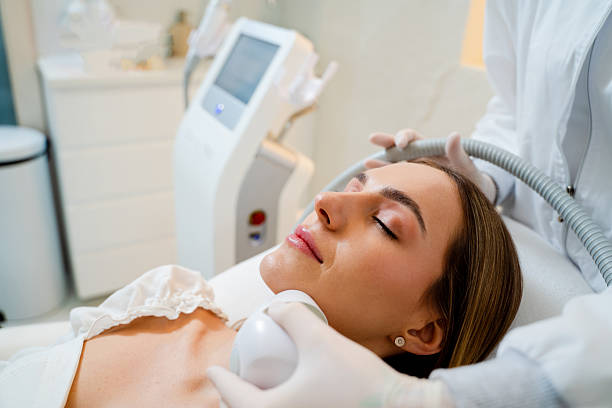
A standard facial delivers products to the surface of the skin. A needle-free treatment is designed to get active ingredients into the deeper layers—the depth that traditionally required a needle to reach. It does this through technology, not through piercing.
There are several different approaches on the UK market. SEYO TDA uses a high-speed air stream to push active ingredients into the skin without breaking the surface. The technology is described as delivering a “needle-free skin rejuvenation revolution”, with the treatment reaching the deeper layers of the skin where traditional topicals cannot go. The whole process is described as “zero trauma” and “zero downtime”.
TKN MesojectGun takes a different route. It uses electroporation—short electrical pulses that create temporary channels in cell membranes—to allow active ingredients to penetrate more effectively. No needles, no punctures, but a delivery mechanism designed to reach the same depth as traditional mesotherapy.
Superboost, which launched in the UK in July 2026, combines two approaches in one treatment. It uses a needle-free infusion system to deliver active ingredients into the skin, followed by facial muscle stimulation to tone and lift. The result is designed to improve both skin quality and underlying muscle support—without a single needle.
What these technologies share is that they deliver results closer to mesotherapy or microneedling, but without needles, without bruising, and without downtime. You walk in, you have the treatment, and you walk out with skin that looks slightly better immediately and continues to improve over the following days and weeks.
Why This Is Happening Now
Part of it is consumer demand. ELLE describes a broader shift in the industry from “correction to optimisation”—people are no longer asking how to change their face, but how to improve the quality of their skin. As Dr Jennifer Owens puts it: “The flex used to be volume. Now it’s radiance”. Needle-free treatments fit that brief: they improve glow, hydration, and firmness without altering facial structure.
Part of it is technology maturing. Superboost’s UK launch in July 2026 was described as a “completely new approach to lifting”. The wider UK non-invasive aesthetic procedures market was valued at $577.2 million in 2025 and is projected to reach $1,619.9 million by 2033, growing at 13.9% per year. Clinics are investing in these technologies because patients are asking for them.
Part of it is also the recognition that not everyone wants to be a “patient”. Some people simply want healthier-looking skin without entering the medicalised world of injectables. Needle-free treatments offer a way to access professional-grade skin improvement without the associations that come with needles—the bruising, the downtime, the “what did you have done?” questions.
A Different Kind of Treatment Experience
One thing that distinguishes needle-free treatments from their injectable counterparts is the experience itself. There is no needle anxiety. There is no risk of bruising at injection sites. There is no need to plan around social events or work commitments.
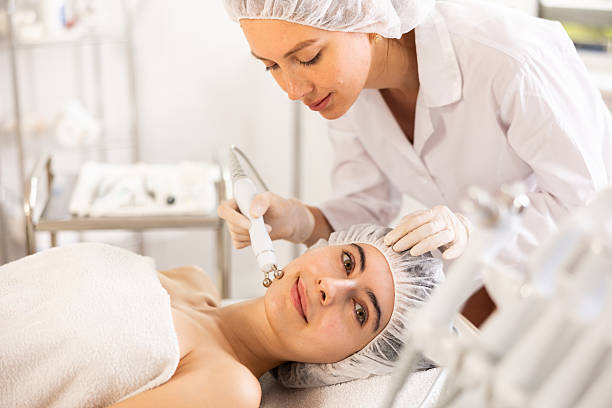
SEYO TDA sessions are often described as comfortable, with clients reporting a cool, pleasant sensation during treatment. TKN MesojectGun is similarly described as pain-free, with the electrical pulses barely noticeable. Superboost combines infusion and stimulation in a way that some practitioners describe as “oddly relaxing”.
This matters more than it might sound. For people who have avoided aesthetic treatments entirely because of the needle barrier, the experience is not a minor detail—it is the thing that makes treatment possible in the first place.
Who Might Consider a Needle-Free Option
Needle-free treatments aren’t trying to replace injectables. They offer a different route for people who might otherwise not be ready for—or comfortable with—a needle-based approach.
That could include people with a genuine fear of needles. It’s more common than many people realise, and it can be a hard barrier to cross even when someone genuinely wants treatment. It could include people who bruise easily or are taking blood-thinning medication, for whom injectables carry additional practical concerns. It could include people who want zero downtime and need to return straight to work or social plans after a session. And it could include people who aren’t ready for injectables but still want to see a real improvement in their skin.
There is also a group of people who simply prefer to start with something gentler. They may eventually move on to injectable treatments later, or they may not. Either way, having the option is the point.
What Needle-Free Treatments Can and Can’t Do
It’s worth being clear about the limits. Needle-free treatments improve skin quality—glow, hydration, texture, firmness. They don’t add volume. They don’t change facial contours. They don’t relax muscle movement.
If your main concern is restoring lost volume or changing the shape of your face, injectable options remain the more direct route. And depending on the technology, delivery efficiency can vary. Results tend to build over a course rather than appearing after a single session. Most practitioners recommend an initial course of treatments followed by periodic maintenance.
It’s also worth noting that “needle-free” is not a single category. Different technologies work in different ways and have different evidence bases. Some rely on mechanical pressure, some on electrical pulses, some on a combination. The word “needle-free” tells you what a treatment doesn’t do. It doesn’t tell you what it does. That’s why a consultation matters—so you can understand what a specific technology is designed to achieve and whether it matches your goals.
What to Ask in a Consultation
If you are curious about needle-free treatments, a consultation is the place to get specific. You can ask what technologies the clinic offers. You can ask what results are realistic for your skin and your concerns. You can ask how many sessions are typically recommended and how long results tend to last. You can ask whether the treatment is suitable for your skin type and medical history. And you can ask what the aftercare involves—even without needles, there are still steps that support the best outcome.
None of these questions are difficult, and any good practitioner will welcome them. The goal is not to be sold on a treatment. It’s to understand whether a needle-free option fits what you actually want.
Conclusion
The value of needle-free treatments isn’t that they replace injectables. It’s that they offer an option for people who have been held back by the needle barrier—whether that’s fear, bruising, downtime, or simply not being ready. If you’ve been curious about skin treatments but put off by the idea of needles, it’s worth asking in a consultation: what needle-free options do you offer? That question itself is a good place to start.